The Italian Parliament: “We will work to deliver humanitarian aid to the Autonomous Administration.”
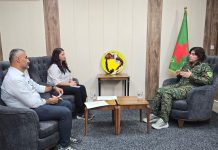
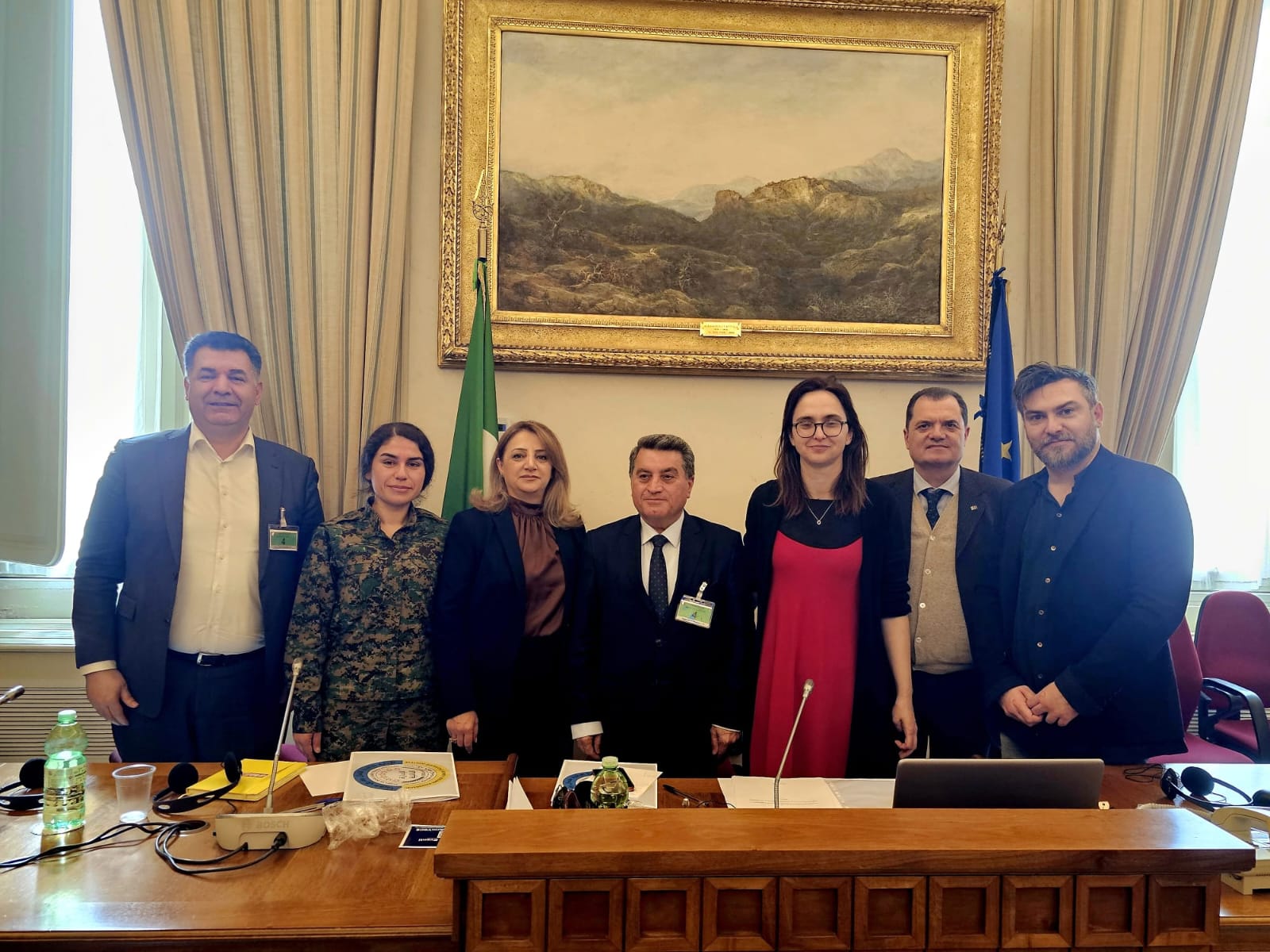
A delegation from the Autonomous Administration of North and East Syria, consisting of Dr. Abdul Karim Omar, the representative of the Autonomous Administration in Europe, Roxan Mohammed, the spokesperson for the Women’s Protection Units, and Media Hassan, the co-chair of the representation of the Autonomous Administration in Switzerland, met with a delegation from the Foreign Relations Committee of the Italian Parliament, led by Ms. Leah Quartapelle, the deputy chair of the committee, along with eight members representing various Italian parties, at the Parliament building in Rome.
At the beginning of the meeting, the Autonomous Administration delegation provided an overview of their experience, emphasizing that it was formed through consensus among all components of the region, regardless of their religious, sectarian, or ethnic affiliations.
Regarding women’s participation in this experience, the delegation stated, “Women play a significant role and hold high positions in the Rojava Revolution. They have been and continue to be at the forefront in the fight against terrorism. They also occupy the highest political and administrative positions and have an active and influential presence in all institutions of the Autonomous Administration, with a participation rate of fifty percent. It’s worth noting that the Autonomous Administration adopts a system of joint presidency in all its institutions and administrative structures.”
The delegation also discussed ways and means to resolve the Syrian crisis, stating, “The Autonomous Administration can be a model for a comprehensive solution for all of Syria. It is certainly not a divisive project, as some malicious actors attempt to portray. We have always been committed to peaceful solutions to the Syrian crisis and have clear visions and ideas in this regard, which we express openly and transparently. We believe that the solution must involve all Syrian components, guaranteeing their rights and legitimate demands, while also emphasizing the necessity of adhering to UN resolution 2254.”
The delegation also highlighted the economic and humanitarian challenges facing the region, noting, “The long years of crisis and the blockade imposed on our areas have plunged them into extremely difficult economic and humanitarian conditions. Despite the worsening situation, the international community remains unable to deliver humanitarian aid to our areas because all aid provided enters regime-controlled areas and is thus prevented from reaching Autonomous Administration areas. It is therefore necessary for the international community to directly engage with us regarding humanitarian assistance.”
Additionally, the Autonomous Administration delegation addressed the issue of terrorism, stating, “Despite the military defeat of the terrorist organization ISIS, it remains active through its sleeper cells, which carry out occasional attacks, taking advantage of the security vacuum created by the focus of the Syrian Democratic Forces on countering attacks by the Turkish army and its mercenaries in the region. These attacks contribute to the continued humanitarian crisis and pose a threat to the lives of millions of residents, potentially leading to mass displacement if left unchecked.”
The delegation also emphasized the importance of the international community’s assistance in resolving the issue of ISIS detainees and their families, pointing out, “There are tens of thousands of ISIS detainees and their families in prisons and camps in North and East Syria. They constitute a ticking time bomb, and it is difficult to predict when it might explode. To prevent a major catastrophe, countries should expedite the repatriation of their citizens and respond to the Autonomous Administration’s call to establish a special court with international jurisdiction to prosecute those involved in war crimes and crimes against humanity.”
Regarding the crimes and violations committed by the Turkish state in North and East Syria, the delegation stated, “The Turkish state and its mercenaries continue their brutal attacks and commit various violations in the occupied areas, including killings, kidnappings, torture, rape, looting, demographic change, and others. Furthermore, they continue to target vital infrastructure in North and East Syria deliberately, creating a major humanitarian crisis that endangers the lives of millions of residents and could potentially lead to mass displacement if it spirals out of control.”
The delegation emphasized that these violations constitute war crimes and crimes against humanity under international law and that the international community should not remain silent. It urged relevant international bodies and institutions to prevent those responsible from escaping punishment.
On their part, the Italian delegation stated, “We closely monitor the situation and developments in North and East Syria and the region as a whole. There are indeed significant challenges facing the areas, and we strongly emphasize the need to curb all attempts to escalate the conflict in the region, including the repeated targeting and violations by Turkey in the areas of the Autonomous Administration, as expanding the conflict will have dire consequences for everyone.”
The Italian delegation added, “We are also aware that extremist terrorist organizations, including ISIS, are the biggest beneficiaries of attempts to destabilize security and stability in North and East Syria. Therefore, the international community is obligated to support the Autonomous Administration to prevent the resurgence of these organizations and to maintain relative security and stability in its areas.”
The Italian delegation affirmed that they would discuss with their government the topics covered in their meeting with the Autonomous Administration delegation, including the possibility of sending a delegation to North and East Syria to assess humanitarian conditions and discuss ways and mechanisms to deliver aid to the region.
YPJ Media Center