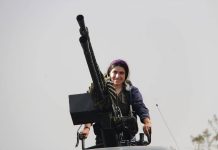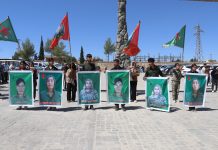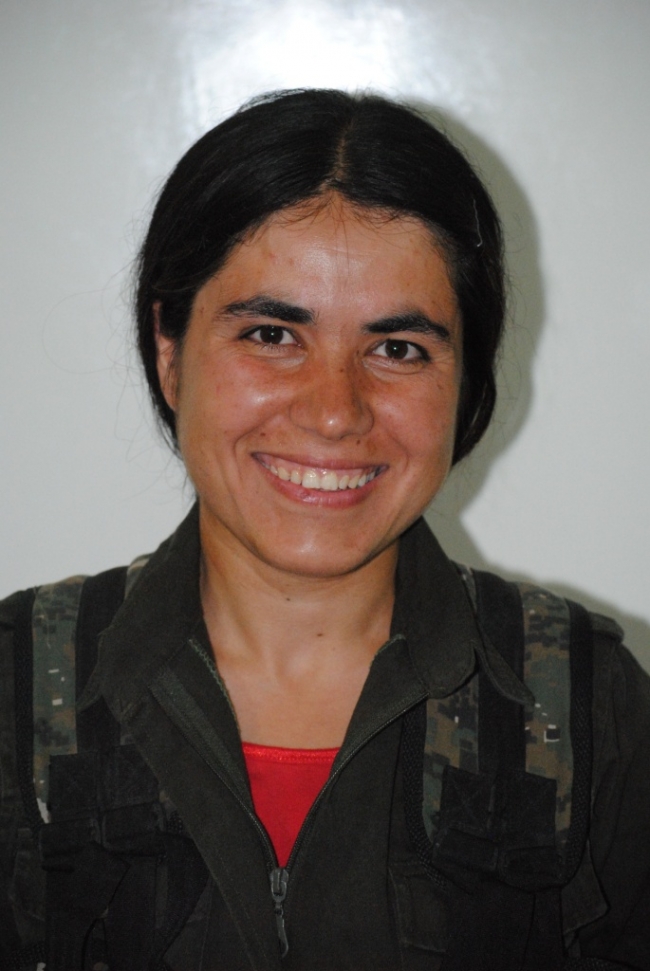
She was not merely a woman carrying a weapon; she was a response to history, embodied in the spirit of the Women’s Protection Units (YPJ). A Kurdish woman from Afrin, from the land of olive trees and the scent of sacred earth, when she heard that Kobanê was burning, she rose as a fighter in the Women’s Protection Units and headed toward where death and life meet.
When Kobanê was under the weight of ISIS’s brutal assault, and the entire world was repeating, “Kobanê has fallen,” when darkness sought to extinguish the light, a fighter from the Women’s Protection Units climbed the hill. Facing dozens of tanks and hundreds of militants who slaughtered people in the name of God, Arîn responded with her own body.
She knew that her bullets would not be enough, but she was certain, through her faith in the Women’s Protection Units, that her life would become a bomb that would block the path of darkness.
Her sacrifice was not death, but life. It marked a turning point in the history of the Women’s Protection Units and demonstrated that these forces had no choice but to stand against the black caliphate and say, “No.” No, you will not pass. At that moment on Miştenûr Hill, the sound of her explosion did not merely shock the militants; it struck fear into the hearts of women around the world and gave them hope.
Arîn was from Afrin, but she became a symbol of Kobanê. Within the Women’s Protection Units, she had learned that Afrin, Kobanê, and Jazira are one entity. They are the land, women, and freedom. If Kobanê fell, Afrin would not remain standing. That is why she went. Not to die, but so that all the women of the world might live.
Today, when we walk through Kobanê, we walk in her footsteps among the ranks of the Women’s Protection Units. Every stone on Miştenûr knows her name. Every breeze blowing from Afrin carries the fragrance of her hair and the scent of the Women’s Protection Units’ resistance. Her story was written in blood, not with a pen.
Arîn Mîrkan is not the end of the story, but its beginning—the beginning of the transformation of Kurdish women from victims into defenders. By joining the Women’s Protection Units, she did not defend herself alone, but the dignity of all women.