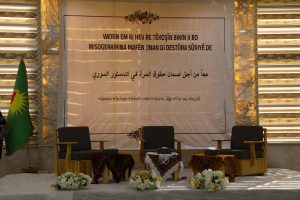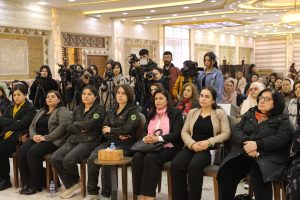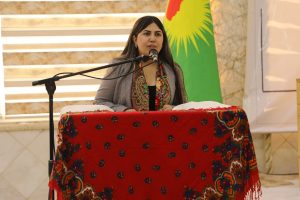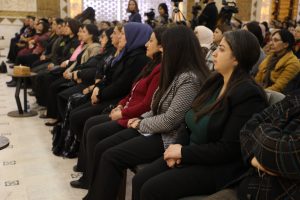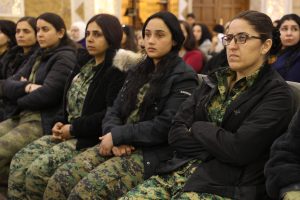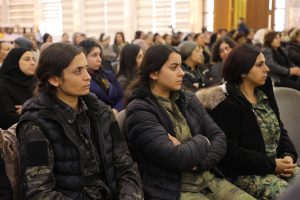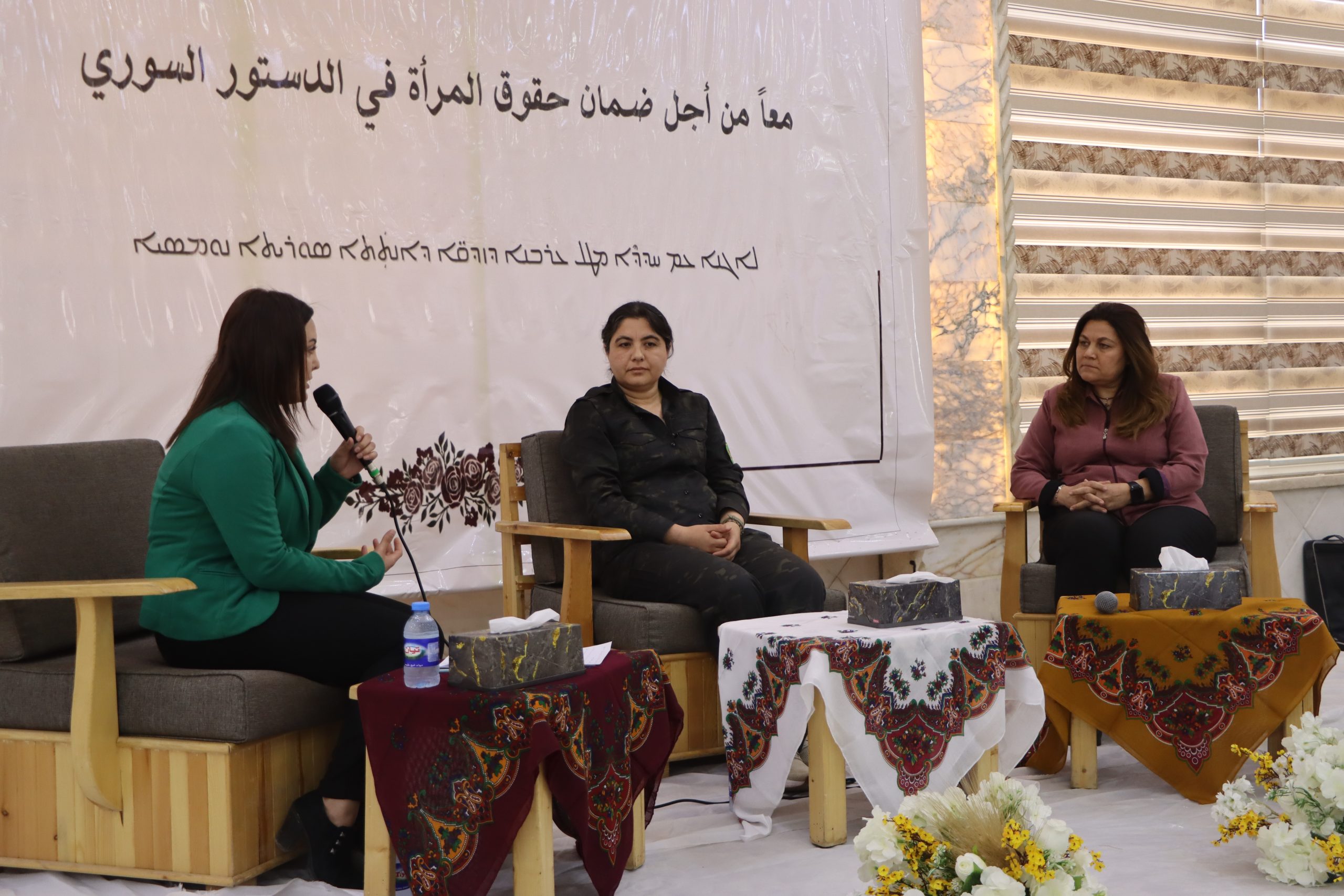
At the Women’s Conference, issues of protection and integration were discussed, and it was emphasized that integration had not yet been achieved, and that the Interim Government is required to amend its policies, stressing that the future Syria could not be built without women and their special protection units.
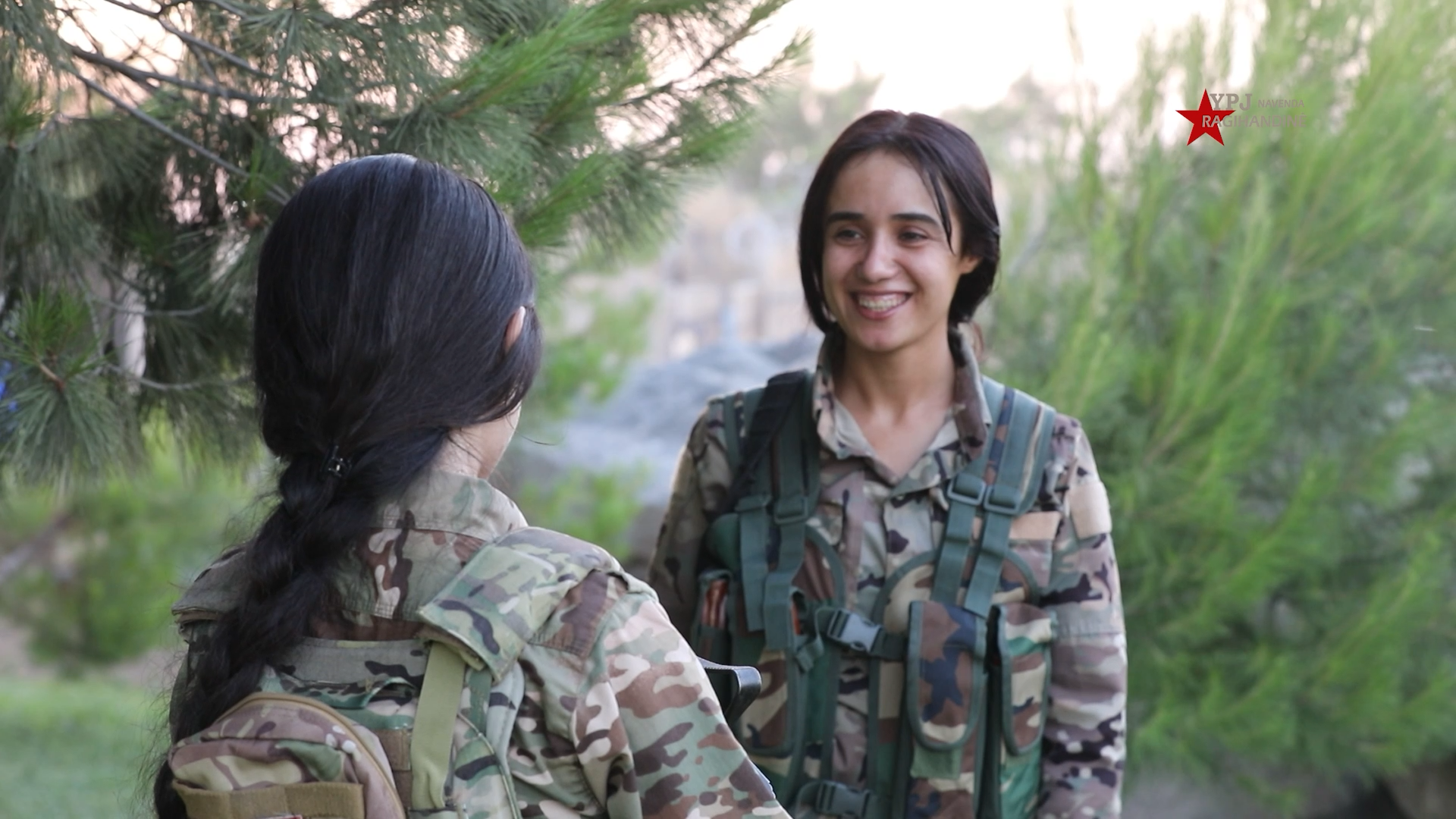
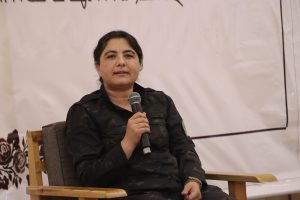 Sarya Afrin; the member of the Women Protection Units (YPJ) General Command, highlighted the vital role of women in defending and protecting society. She emphasized the sacrifices of female fighters who were martyred for the freedom of society and women’s rights, and congratulated women on Newroz and International Women’s Day.
Sarya Afrin said, “This revolution began with women’s leadership and women like the Women’s Protection Units (YPJ) have taken on the responsibility of defending women’s gains. From all over the homeland, women have secured their places in the ranks of the units.”
She added, “In our battles against ISIS mercenaries, thousands of our comrades, both men and women, were martyred confronting ISIS’s patriarchal terrorism. We dedicated our efforts to protecting human values and strived to be a model for Kurdish women. Our struggle, based on the philosophy of ‘Women, Life, Freedom,’ will continue, and now we must protect the gains of the women’s revolution.”
Sarya Afrin made clear the current situation in Syria, noting that women have made significant sacrifices and continue their activism with a high level of commitment. She emphasized the importance of the integration process, stating, “The discussion about integration is ongoing. We are part of the Syrian Democratic Forces and plan to participate, but unfortunately, the Interim Government has not cooperated. We continue our efforts to ensure women’s participation in the defense, political, and social spheres in Syria. We insist that women not be incorporated into the conventional army, and we strive to reclaim our rights ourselves through struggle. Our goal is to protect women throughout Syria.”
Sarya Afrin concluded, “As a protection force, we believe in our responsibility to protect Syria and the gains made by women. We are not affiliated with any interim government, and we will reclaim our rights through struggle. Syria cannot exist without women. We must be a model in all fields; military, civilian, and political.” She affirmed, “We hope our model will be an inspiration to women in Kurdistan and the world. Our project is based on this principle, and our strength gives us a great responsibility towards our people.”
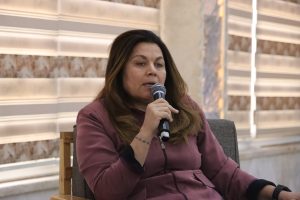 Following this, Fawza Yousef; the member of the Presidential Council of the Democratic Union Party (PYD), spoke about the fourth axis of the conference: integration.
Yousef explained that “the country is going through a critical phase, emphasizing that women are the most affected by its repercussions, given the prevailing patriarchal mindset, both internally and through the interventions of external powers.” She pointed out that “the crises are not confined to Syria, but rather begin there and subsequently spread to other components, due to the absence of a just vision for resolving the problems and the dominance of systems that lack domestic justice and burden women and the people.”
Yousef questioned what has changed in Syria after 15 years since the outbreak of the revolution, recalling the immense sacrifices made by the Syrian people; martyrs and millions of displaced persons and refugees, in pursuit of freedom and equality, before the revolution was exploited, leading to its continuation to this day without achieving its goals.
She added, “The dominant global powers have no genuine intention of guaranteeing the freedom of peoples and women, calling for the people’s need to focus on protecting their own rights.” She noted that what happened in January marked the beginning of what she described as the “Middle East flood,” pointing out that its origin in this region stemmed from its transformation into a democratic model and a source of hope for women and peoples, which prompted some powers to attempt to undermine this model.
She affirmed that efforts were directed towards resolving problems through democratic means, but some parties, including Iran, rushed to implement their own agendas. She stressed the necessity for women to consciously assess this phase, identify weaknesses, and work to address them.
She explained that attempts to target the hopes of peoples and women were met with strong resistance, which played a decisive role in preventing massacres, emphasizing that without this resistance, the fate of the Kurdish people would have been similar to what happened in Shengal, noting that this resistance contributed to their resurgence.
“We are not satisfied with the agreement, but we protected ourselves from genocide”
Fawza Yousef addressed the January 29th Agreement, saying, “This agreement was not to our liking, but the attacks had already begun, and with the escalation of what was called the ‘regional storm,’ we managed to protect ourselves from genocide. We consider this an opportunity to reorganize and continue the struggle.”
She emphasized that the struggle would continue through political and legal means, noting that integration was a form of struggle to protect rights, and this experience could be generalized to the rest of Syria. She added that issues of women, democracy, freedom, and justice were issues that concerned all of Syria.
She explained that the integration files included a ceasefire, the return of displaced persons, language, education, and the military aspect, some of which had been partially achieved, while others remained unresolved and complex. She pointed out that some appointments, especially in the Kobani administration, did not have popular acceptance, stressing the necessity for officials to be chosen by the will of the people.
She also pointed to the lack of female representation in appointments so far, and considered this a fundamental problem, in addition to the failure to return displaced people, especially from Serê Kaniyê, despite the continued efforts to achieve this.
Integration does not mean assimilation””
Fawza Yousef emphasized that Integration meant mutual participation between two parties, not the assimilation of only one, arguing that such assimilation would lead to exclusion. She added that the state was also required to change its policies, noting that the current constitutional declaration was insufficient and that the people of the region had the right to learn in their own languages, affirming that this right was legitimate and that the Autonomous Administration project was a necessity for all of Syria, not just for specific areas.
The final statement was revealed in Arabic by Kongra Star Coordination member Berivan Khaled, while the Kurdish version was revealed by Zainab Mohammed, a member of the Committee on Relations and Democratic Political Agreements of Kongra Star.
The statement affirmed that the conference represents a significant turning point in the path toward a political solution in Syria, noting that women’s freedom and a democratic society form the cornerstone of a new social contract that would end authoritarianism and oppressive centralization.
The main outcomes and recommendations of the conference are as follows:
-Constitutionally enshrine the achievements of the “Women’s Revolution” in North and East Syria and across the country as sovereign rights, and embed the fundamental values of equality in the Syrian constitution to safeguard these historic gains against any future political or legislative regression.
-Adopt full parity (50%) as a mandatory structural principle and the sole legal standard for occupying all positions in sovereign state institutions, executive, legislative, and judicial, thereby ending monopolies over political decision-making and ensuring gender justice in governance.
-Constitutionally institutionalize the system of “democratic decentralization” as a political and legal framework to integrate the institutions of the Autonomous Administration into the structure of the Syrian state, transforming them into self-governing units with full legislative and executive powers, while preserving the distinctiveness of the women-led democratic experience as an inspiring national model.
-Recognize the Women’s Protection Units (YPJ) as a fundamental and integral pillar of Syria’s national defense system, while fully preserving their organizational and leadership independence as a force protecting society and safeguarding security against terrorism and all forms of exclusionary ideology.
-Enact democratic laws guaranteeing the licensing and legal recognition of all political parties, organizations, and women’s movements representing the popular will in the Autonomous Administration regions, and prohibit any targeting or security restrictions against them under the framework of the new Syrian state.
-Introduce strict legislation criminalizing all forms of hate speech and incitement against women, alongside legal mechanisms to hold accountable those who engage in defamation or organized campaigns targeting women leaders and pioneers with the aim of excluding them from public life or distorting their political and social roles.
-Establish a “Women’s Rights Protection Authority” with constitutional powers granting it veto rights over any law or legislation that contradicts the principle of equality, and mandate it to oversee the alignment of all national legislation with international conventions.
-Officially and fully recognize the educational curricula of the Autonomous Administration, as well as existing health and service systems, and consider linguistic and cultural pluralism (Kurdish, Syriac, Arabic, Armenian) a sacred civic right managed by society within its decentralized framework without central interference.
-Enact a unified civil personal status law inspired by the “Women’s Law” applied in the Autonomous Administration, abolishing all discriminatory laws, ensuring protection from all forms of violence, and guaranteeing women full sovereignty over their civil and personal affairs.
-Guarantee freedom of movement, residence, and work in women’s, civil, and political spheres for all women and activists across Syrian provinces without security or administrative restrictions, and prohibit all forms of persecution or harassment related to public activity, ensuring the cohesion of women’s struggle and strengthening social and political ties nationwide.
-Secure the immediate and unconditional release of all detainees, abductees, and forcibly disappeared persons held due to their political or civil activities, and pursue serious and systematic efforts to reveal the fate of the missing, treating this issue as a humanitarian cause beyond negotiation and a national and moral obligation preceding any political settlement.
-Establish a comprehensive and gender-sensitive transitional justice process that prioritizes accountability for perpetrators of violations, ends the culture of impunity, and ensures full psychological and material reparations for victims and survivors of war.
-Commit internationally and nationally to the voluntary and safe return of displaced persons and refugees to their original homes, and take immediate action to eliminate the effects of forced demographic change.
-Build a cross-affiliation women’s network to assert the representation of Syrian women’s will in all international decision-making forums related to the political solution, ensuring that no social contract or constitution is drafted without full and empowered female participation.
-Draft a charter providing legal and security protection for women human rights defenders and political activists, and criminalize any interference by security agencies in independent civil or political work.
-Ensure women’s effective participation in all committees drafting the new constitution, to guarantee constitutional provisions that protect the rights of all ethnic and religious components and preserve pluralism as the essence of Syria’s future identity.
-Secure the independence of economic resources allocated to women’s projects within the state’s general budget, ensuring women’s economic empowerment as an integral part of their political and social autonomy.
-The statement reaffirmed a firm commitment to these outcomes as an indivisible roadmap for struggle, alongside mobilizing political, diplomatic, and legal means to ensure their integration into the core of the Syrian constitution, and building national and international alliances to deliver this vision to decision-making circles.
The statement concluded: “Preserving the achievements of the women’s revolution and enshrining them constitutionally is an irreversible commitment. The struggle will continue to ensure the protection of Syrian women’s rights, safeguard their dignity, and strengthen their leading role in guiding Syria toward comprehensive democratic transformation.”